
Welcome To SexGenderBody

I define my sex, gender, body.  You define yours.

These words summarize the intention of this site.  There are no experts to tell us how to claim or identify our own sex, gender, body (sgb).

sexgenderbody.com is a community, collaborative blog, built in the same functional model of dailykos.com and mydd.com.  The site is open-invitation, meaning that anyone can register and post diaries.  This site has been built to serve as a public meeting place for honest and respectful conversations about the entire width and breadth of sex, gender, body. Topics will range from the intimate to the mundane, falling in love, looking in the mirror, workplace, health, advocacy, friendship, sex, identity, change, finances and the list goes on. 

Every person on the planet has a unique and rich life of experience and expression.  We all define ourselves as individuals in all aspects of our lives, including sex, gender & body.  These three areas are intertwined with many other aspects of our identity.

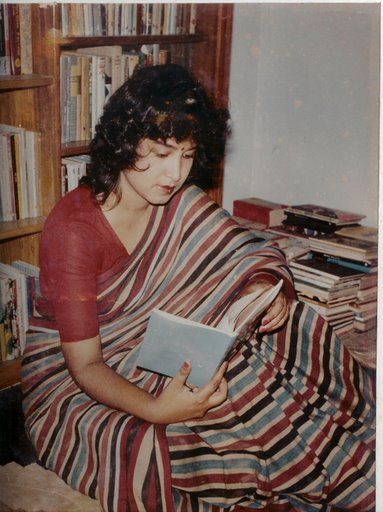
Taslima Nasrin: Speech from Women's Forum

This speech was given by Taslima Nasrin in France, on October 15, 2005 at The Women's Forum.  Little has changed for herself or women around the world, since then.

          I would like to express my heartfelt gratitude for having been invited to the first International Conference by   Women's Forum.  Today I would tell you a little bit about my life. 
          I was born in 1962 to a Muslim family in a small town called Mymensingh  in what then was East Pakistan. Now, after it gained its independence in 1971, the country is called Bangladesh
          Bangladesh, where I was born, is a nation of more than 140 million people, one of the most populous countries in the world. It is a country where 70 per cent of the people live below the poverty line, where more than half the population cannot read and write, a country where there is insufficient health care, and where infant mortality is high. Nearly 40 million women have no access to education nor do they have the possibility of
becoming independent. 
        In my country, my childhood was not much different from that of other girls of my generation. Like other girls of a middle-class family, I was sent to a  school. Girls frequently dropped out of school when they were fifteen or sixteen, ages at which they often were given into marriage by their parents. Few girls had a chance to continue their studies, for after an arranged marriage they were not allowed to continue studying in school or college or university nor could they take a job. They became totally dependent upon their husbands, in other words.

A sane voice: Arundhati Roy


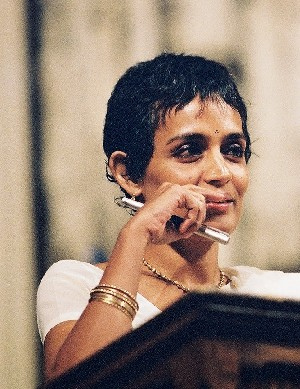
arundhati roy

Image courtesy of cesr.org

This post begins a series to recognize people that speak about the world in terms of what they observe and what they can prove.  Their voices stand out in the crowd.  In their words, they speak not of fantasy, delusion and rationalization.  Instead, they utilize the gifts of human cognition, awareness to observe what is here in the world around us.  They are not dogmatic, but analytic and take in the world 'warts & all' for what it is and what it is not.  They do not separate humankind from nature in any form of grandeur.  In short, they look at things the way they really are and not what we would have them be.

Note: The term 'reality' is subjective because of differing perspectives from one person to another.  Our individual experiences with language, sensory perception and associative cognition all conspire to individuate and isolate us from each other.  The differences can range from miniscule to incomprehensible. 

Then, there are shared agreements of 'reality' that occur nonetheless.  We can look at a mass grave and all agree that there are dead people there.

Given all of this, it's a wonder we communicate at all.

On to Arundhati Roy.  I first learned of her this year.  John Cusack quoted her in this article about his film "War, Inc." 

As Arundhati Roy says, we need to lay siege to empire with everything we've got. You know? Deprive it of oxygen, shame it, mock it, tell our own stories. This corporatist revolution will collapse if we refuse to buy what they're selling ... their ideas, their wars, their notion of inevitability.

Something in her calling out the Empire and naming the strategy to defeat it in terms of laying siege, strongly resonated within me.  I looked her up on teh Google.  I found writings, videos and many, many opinions about her. 

Butch/Femme -- Crip

I just found another ass-kicking voice in the wilderness: WheelchairDancer.  I followed her on twitter the other day based on some of her tweets and a look at her blog, stated intentions and general 'vibe'.  I asked her if I could repost the piece below and she asked that I describe what she does at her site.  Her twitter feed states:

dancing in a wheelchair

I would add that to me, she is a vibrant, direct, compelling and honest voice bent on being heard in her own words and defined on her own terms.  Please comment the hell out of this piece, so we can coax her into writing here on a regular basis.

To offer my voice in this important conversation, I want to write my personal resistance to both of these labels and to suggest how disability complicates them as defining personal categories.

Bfp begins by wondering where she is on the butch-femme spectrum. Cripchick continues by observing how disability and sexuality are so publicly invisible that even getting to these terms is hard. She adds the terms cripchicks and gimpgirls into the conversation of gender presentation, explicitly recognizing disability as a primary and defining force.

I don't have identifying terminology to add -- though I wish there were a more hip word for somewhat middle-aged bisexual disabled women like me. My goal here is to look a little at my body and my experiences in being read by others. I am talking about how I am read and not how I would define myself, how *I* would identify, because I don't actually know how I would choose to describe myself in the terms of this conversation.

Who am I, if I'm not me anymore?

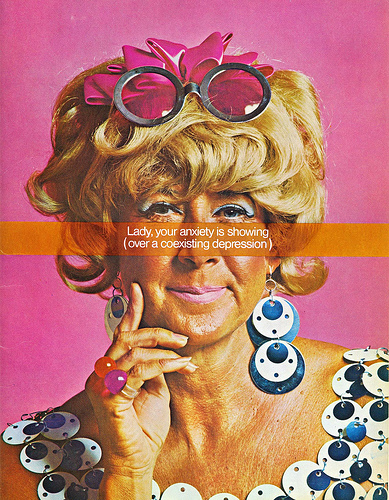
We get older.  We all do.  If we're really lucky, we get a lot older.  Sooner or later, we die.  That is the way of things.  As I rise this morning, eating my breakfast, I turn my attention to this aspect of sex, gender, body that I was kind of avoiding: getting old. 

Age is just as much of a conversation about sex, gender, body as anything else.  It could be argued that no conversation about sgb, or identity can exist without the conversation of age being included.  One of the site rules at sexgenderbody.com is that no sex with minors is condoned or supported on this site.

As we age, we identify ourselves in different terms.  We shift how we view ourselves, how we wish others to see us and how we see others.  Age prejudice and labels are just as common as any other form of discrimination.  I don't know if any one form of discrimination gets more assistance or license than any other form, but age discrimination does seem to benefit greatly from a youth-worshiping society and many people's fear of dying.  Aging and the approach of death is uncomfortable for many to deal with.  It's why I was in no hurry to look at it myself.

Whether or not I include and embrace aging into the conversations of sex, gender, body - age is part of how each of us identify ourselves and are identified by others.  Plain and simple.

So, I took off looking for links on age, identity, sex, gender, body.  This is what I found for different search terms on Google.

Aging and Gender Diversity

By Tarynn M. Witten, PhD, MSW, FGSA

Social Work Today

Vol. 4 No. 4 p. 28


Transsexuals, transgenders, cross-dressers, and other persons whose gender expression or identification is other than the “traditional” male or female represent a substantial but epidemiologically invisible minority group within the worldwide older adult population.

In an era in which forecasting the health of elder populations is increasingly important, discussion of quality-of-life issues faced by older transsexuals and other gender minority persons should not be deferred. It is difficult, unfortunately, to provide data-based information about many of the health issues faced by elder transsexuals, as this group is particularly “epidemiologically invisible” (Witten and Eyler, 1999), with many of its members preferring not to reveal their natal sex due to perceived and real risks and stigma associated with being “out.” However, the number of transgender-, transsexual-, and intersex-identified elders is increasing worldwide (Witten, 2002, 2003).

Stages
The gender minority community includes numerous subgroups of importance. Many intersex-identified elder individuals will likely have had genital surgery forced upon them at early ages and may have been subjected to hormonal treatments as well. They may, consequently, be facing numerous psychological issues related to the undesired violation of their bodies and effects the undesired surgery has had on their lives. Others in the same group who may not have had the surgery are dealing with the consequences of their lifelong, nonnormative status.

For a given transidentified person, time of transition (hormonal and surgical modification) can be important to understanding the aging process. A person may be older when he or she chooses to transition, or the person may have made the transition earlier in life and is now older in the contragender identity and body, having dealt with a longer period of time in the transition state. Each of these individuals may or may not be hormonally or surgically modified. As such, their experience as elders will differ and requires understanding from the social worker, geriatric case manager, and/or caregiver.

Fat Enough to Belong?

Dimensions Magazine is really turning into a great place to find personal and engaging talk on how large individuals identify themselves to society and are identified by society.  The site provides a clear demonstration of how we all seek to be known for who we are, in our own words.  This desire (often times a struggle) varies only by subject matter.  Whether it is weight, BDSM, gender, age, disability or any other conversation about who we are in the world, we all have a unique self that we know ourselves to be.  We all look for a way for others to see that and to accept us as we define ourselves.


by Sally E. Smith

The choice of models featured in the last issue of Dimensions brought up an old question: who is fat enough to belong to the size acceptance movement? The answer should be obvious, but apparently, to many people it is not.

The differences between the two models featured in the last issue of Dimensions (175 pound Catherine and super-size Cathy) were obvious--or were they? While it's true that one model outweighed the other by 300 pounds, the experiences of both women were similar on many levels. The inclusion of a 175-pound model in the pages of Dimensions generated reader comments that range from indignation that featuring a "skinny" model, to admissions that many FAs also find "smaller" large woman attractive, to kudos for embracing size diversity.

This spectrum of reactions mirrors issues that have plagued the size acceptance movement for many years, such as sizism within the movement, the prioritization of the movement' s work, and even how groups and organizations define themselves.

Sacred Whores

Divine Feminine Dancing To The Rhythm

In my initial article here at SexGenderBody, I briefly touched on the topic of how it might be beneficial for the word "slut" or "whore" to be reframed. Today, I'd like to explore the topic of sluthood as a desirable state to arrive at and also delve into the notion that sex itself is a sacred act to be relished and celebrated.

Once upon a time before organized religion (i.e. the patriarchy) was constructed and inflicted upon the masses, sex was a way to express and convey worship to the divine forces. Sex was viewed as a vehicle toward a process of transformation and as a way to embrace the sacred.  The sacred was defined as that which unified the body, mind and soul, rather than an entity existing *outside* of one's human experience.  Therefore, sex acts were a sacred way to connect Self to the divine, and often this form of divinity was embodied in nature, the earth and the Goddess. 

Qualls-Corbett writes in The Sacred Prostitute:

"Desire and sexual response experienced as a regenerative power were recognized as a gift or a blessing from the divine.  Man's and woman's sexual nature and their religious attitude were inseparable....they offered the sex act to the goddess revered for love and passion..."

FAT SEX: About Positions and Attitudes

I found this post at Dimensions Magazine.  It is frank and somewhat irreverent, written with a flippant usage of the word 'fat', which may be a trigger.  Nevertheless, if you read along, you will find that the position is to dispel, shatter and assault the negative myths and stereotypes about the sexual experience of large people.

The Mythology of Obesity tells us that sex with a fat partner is either fruitless or impossible. It's a prejudice that crosses all boundaries of race, class, education, and physique: you're as likely to encounter it in a gynecologist's office as in the pages of The National Lampoon.

In the real world, sex is more likely to be impeded by anxiety than adiposity. Fear of rejection, fear of not meeting the partner's expectations, and fear of not being able to perform are among the most common emotional barriers to intercourse. Some dysfunctional people harbor feelings of guilt over their sexual needs, or lack the skill or desire to stimulate their partner. Even mild anxiety can impede or disable sexual performance. Ignorance and inexperience contribute their own problems. "Frequently, for instance" reveals Dr. Helen Singer Kaplan in Psychology Today, "neither spouse knows where the clitoris is or recognizes its potential for eliciting erotic pleasure. They have intercourse as soon as the husband has an erection, and he ejaculates without considering whether his partner is ready. Such couples genuinely wonder why the wife does not reach orgasm."

Fat people suffer all these problems in spades. The social pressures they endure create numerous obstacles to sexual interaction. The most direct effect comes from dieting: prolonged semistarvation can seriously dampen the libido, and a woman who is losing weight can experience a disruption of her normal menstrual cycle. Indirect effects of prejudice include a lack of opportunity, a history of rejection, and a negative body image. "Some obese woman, fearful of competing for a man's interest, avoid interpersonal encounters and disparage males in general," writes Dr. Barbara E. Bess in the journal Consultant. "Once involved in a relationship, they doubt the partner's sincerity." Self-hatred manifests itself in a number of anti-erotic behaviors. "Some women are reluctant to act seductively for fear of rejection and ridicule. Young women ... express the desire to look 'sexy' and wear seductive clothes, but fear that men in particular will think them grotesque. ... Many obese persons attempt to hide their bodies under cover of darkness, or keep their clothes on during sexual intimacy."

Polyamory: No such thing as bad publicity?

Infinity heart

Conservative media have had a sudden spate of hysteria about polyamory in the last two weeks.

It began when Fox News picked up the topic, working from a sympathetic article in Tina Brown's online magazine "The Daily Beast." The article described the touching commitment ceremony of a triad of lovers in Hawaii. Several Fox News hosts pounded the subject for a couple days, decrying the obvious slippery slope from gay marriage to poly marriage to, as Bill O'Reilly warned, marrying turtles. O'Reilly has also warned that people will soon be marrying goats, dolphins, and ducks.

Fox's mini-jihad brought polyamory to the attention of Chuck Colson of Watergate fame...

Syndicate content

AddThis

Powered by Drupal, an open source content management system